There have been two main points of focus for the project over the last month.
People’s Permacomputer Text Editor
You may have seen previously that a brief proof-of-concept BASIC text editor was published by the project.
Work continues on the text editor.
It is intended to suit the permacomputer hardware that the project has been developing.
People’s Permacomputer Model 1
There has been a continuing evolution of the design of the first computer model that the project has been trying to plan out and construct.
The project figures that supplying a cheap computer to purchase would facilitate further interest in the project’s mission to promote digital literacy.
The design requirements of this computer are:
- Must be ‘instant-on’–i.e. the computer boots to its environment instantaneously.
- Must be some kind of an all-in-one unit.
The hope is that people interested in this project will not have to struggle with setting up their own BASIC environment if one is supplied to them.
To this end, the project proposes two models, one the bigger sibling of the other.
Model 1 will comprise of a refinement of the following project:
https://www.hackster.io/sl001/arduino-rp2040-standalone-iot-computer-running-basic-433144
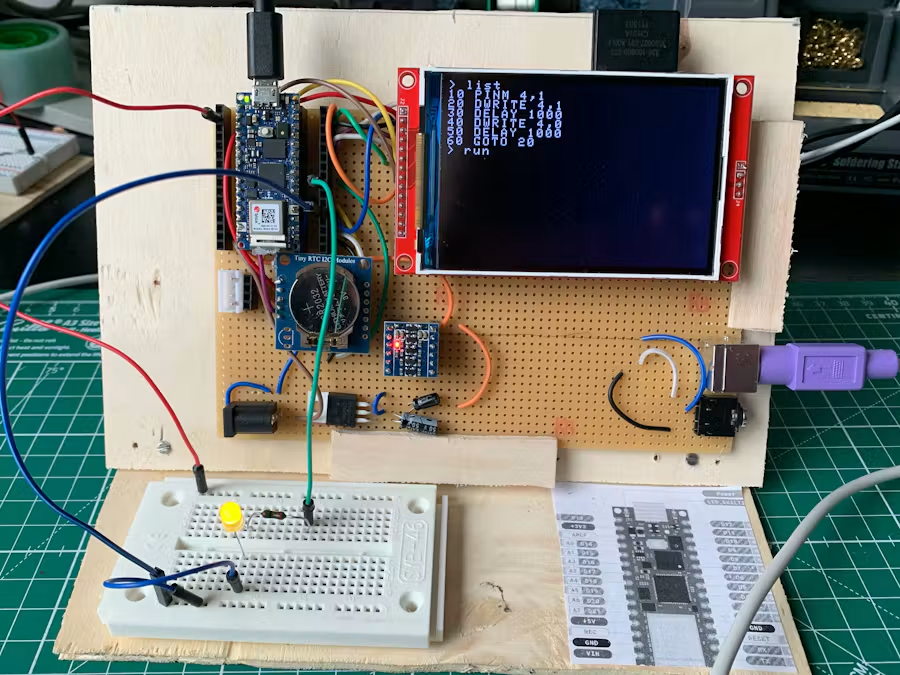
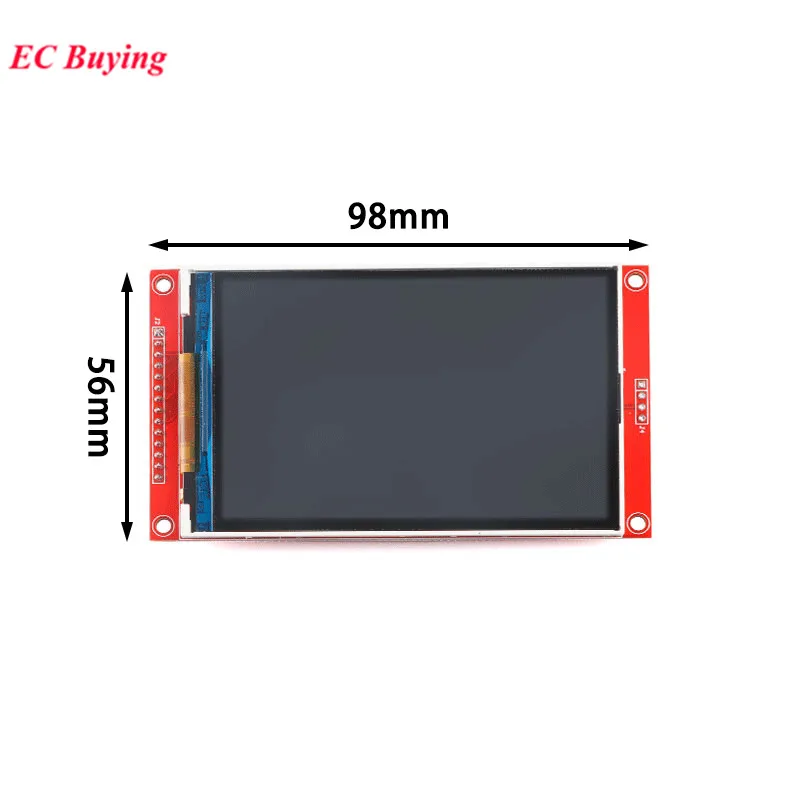
This design makes good on the project’s issues with video display. The RP2040 microcontroller board at the heart of this project is able to run both Stefan’s BASIC and drive a reasonably affordable LCD screen.
For more information about how to get one of these screens, please see:
https://www.aliexpress.com/item/33015586094.html
Permacomputer Model 2
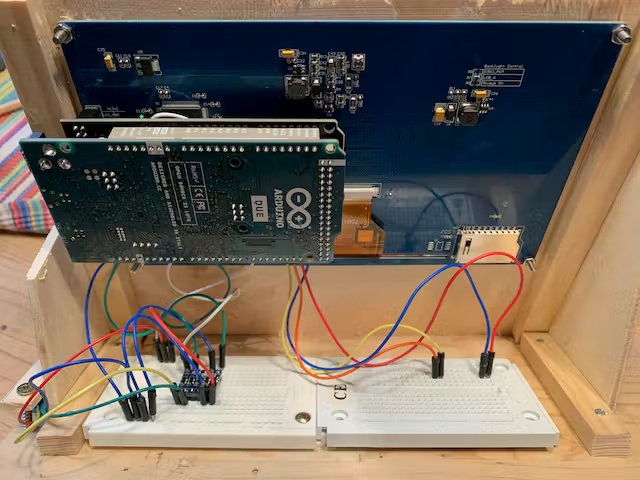
Model 2 is not necessarily more powerful than Model 1, but it will have a bigger screen, and support USB keyboard more easily.
https://www.hackster.io/sl001/homecomputer-from-scratch-a04fb9
Both models will support idiomatic BASIC graphics commands, such as LINE, CIRCLE, PLOT, etc.
Caveats
The project has decided to ship an all-in-one unit, with one exception. To keep the unit inexpensive, we will be requiring the user to supply their own keyboard.
Model 1 appears only to support PS/2 keyboards. This is an issue. In order to make it easier to plug in a (more common) USB keyboard, it may become necessary to include another RP2040 to convert USB signals to the PS/2 ones that Model 1 will accept:
https://github.com/No0ne/ps2pico
There is no such limitation on Model 2. It is based on the Arduino Due 32-bit board, which includes, rather luckily, 2 USB sockets.
Leave a Reply